Book Best Sustainable Hotels in Europe | 2026 Eco-Luxury Guide
The Definitive 2026 Guide to Book Best Sustainable Hotels in Europe: Luxury Meets Responsibility
The European travel landscape has undergone a radical transformation, moving away from conspicuous consumption toward “Regenerative Tourism.” For the discerning traveler in 2026, the decision to book best sustainable hotels in Europe is an intentional investment in environmental stewardship without compromising on five-star comfort. These establishments—ranging from solar-powered Alpine retreats to circular-economy boutiques in Scandinavia—transcend traditional hospitality by integrating carbon-negative technologies and hyper-local sourcing into their core DNA.
As the global travel market shifts toward ethical transparency, Europe’s premier eco-hotels have moved beyond “greenwashing” to implement verifiable Earth-first practices. Whether you are seeking a plastic-free sanctuary in the Greek Isles or a geothermal-powered estate in Iceland, understanding the specific “Sustainability DNA” of each property is essential. This guide provides an exhaustive breakdown of the top properties to book, the technological benefits of green hospitality, and practical strategies for securing your 2026 eco-conscious escape.

Understanding the Landscape of Sustainable Hospitality in Europe
The core concept of a sustainable hotel in Europe is defined by its “Triple Bottom Line”: a balance of social equity, environmental health, and economic viability. In 2026, a truly green stay implies a commitment to “Net-Positive” operations, where the hotel gives back more to the local ecosystem than it consumes. When you book best sustainable hotels in Europe, you are choosing an environment where every element—from the non-toxic linen to the greywater irrigation systems—is designed to minimize the ecological footprint while maximizing guest well-being.
Commonly, travelers approach these hotels seeking a deeper connection to the destination. The expectation in 2026 includes “Zero-Waste” dining programs, off-grid energy independence, and the total elimination of single-use plastics. The outcome of a successful booking is “Guilt-Free Luxury”—a stay that provides high-end amenities, such as organic spas and Michelin-starred vegan cuisine, while ensuring the preservation of the surrounding landscape for future generations.
| Category | Primary Technology | Best For | Estimated ADR (2026) |
| Carbon-Negative Resort | Solar/Wind + Carbon Offsetting | Climate-Conscious Families | €450 – €900 |
| Biophilic Boutique | Vertical Gardens & Natural Airflow | Wellness & Design Lovers | €350 – €750 |
| Off-Grid Alpine | Geothermal & Biomass | Adventure & Seclusion | €500 – €1,200 |
| Circular Urban | Upcycled Materials & Waste-to-Energy | Business & City Explorers | €250 – €550 |
Choosing the right category requires balancing your carbon goals with your desired aesthetic. While a Carbon-Negative resort offers the most significant environmental impact, a Biophilic Boutique provides a sensory-rich experience that emphasizes mental health and a connection to nature through architectural design.
Technological Benefits of Eco-Luxury Stays
The primary benefit of opting for high-end sustainable hotels in Europe lies in the integration of “Frictionless Eco-Technology.” In 2026, Europe’s top properties lead the market in “Intelligent Resource Management.” Guests benefit from AI-driven energy systems that adjust room lighting and temperature based on occupancy and natural solar gain. This technology ensures that energy is never wasted on empty rooms, effectively solving the problem of high-energy consumption in large-scale hospitality without the guest ever feeling a drop in comfort.
Another major benefit is the use of “Advanced Bio-Filtration Systems.” Many premium sustainable hotels now feature natural swimming pools that utilize plants and microorganisms instead of harsh chlorine to purify the water. Furthermore, high-tech greywater recycling systems filter shower and sink water for use in onsite organic gardens. For the guest, this means swimming in chemical-free water and consuming produce that has been irrigated through a closed-loop system, providing both health benefits and environmental peace of mind.
Furthermore, the “Smart Sustainable Concierge” benefit is a hallmark of the 2026 European stay. Hotels now utilize localized apps that track the carbon footprint of your stay in real-time, offering rewards for low-impact choices, such as opting for rail travel over air or choosing plant-based dining. This ensures that the guest is an active participant in the property’s sustainability mission, providing a sense of purpose and ethical alignment that traditional luxury hotels cannot replicate.
Top 5 Sustainable Hotels in Europe to Book in 2026
1. Svart, Norway

Svart is the world’s first “Powerhouse” hotel, meaning it produces more energy than it consumes over its lifetime. Located at the base of the Svartisen glacier, its brand DNA is “Architectural Sustainability.” The circular design is inspired by the fiskehjell (wooden structure for drying fish) and offers 360-degree views of the Arctic landscape while harvesting solar energy through its unique roof structure.
Product Explanation and Cost:
To book best sustainable hotels in Europe like Svart requires planning for a premium experience. Nightly rates in 2026 start at approximately €850. The product includes “Glacier-to-Table” dining, off-grid laboratory tours, and rooms constructed from sustainable timber and stone. The cost reflects its status as a global pioneer in carbon-negative architecture and its remote, pristine location.
Use Case and Problem Solved:
Svart solves the “Arctic Fragility” problem. For travelers who want to visit glaciers but fear the environmental impact of their stay, Svart provides a zero-impact sanctuary. It is the perfect solve for those who want to witness the Northern Lights while supporting a project that actively preserves the Norwegian permafrost.
2. Lefay Resort & SPA Lago di Garda, Italy
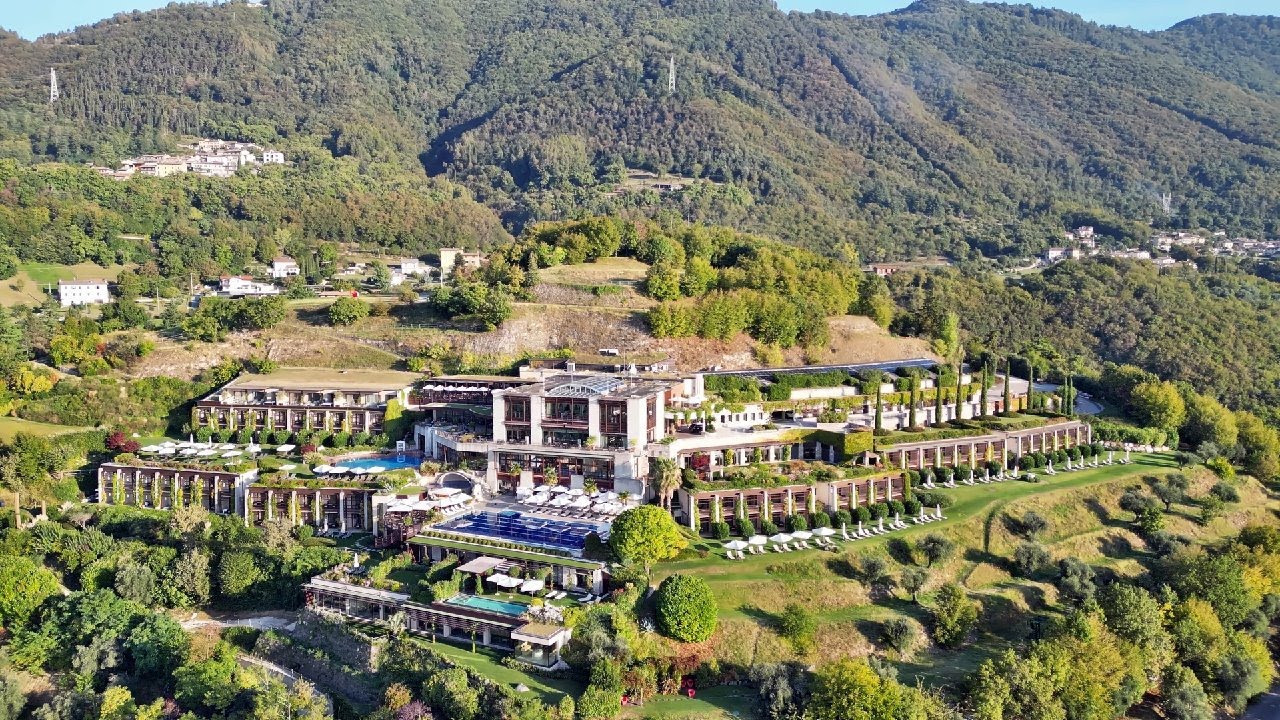
Lefay Resort is a titan of “Total Wellness Sustainability.” Its brand DNA is “Mediterranean Harmony.” It was the first Italian company in the tourism sector to sign an agreement with the Ministry of the Environment to neutralize its CO2 emissions. The resort is built into the hillside to minimize visual impact and maximize natural thermal insulation.
Product Explanation and Cost:
Rates start at roughly €550 per night. The product features a 4,300-square-meter spa that combines Traditional Chinese Medicine with Western scientific research. The cost includes carbon-neutral stays certified by the CER (Certified Emission Reductions) and access to a 27-hectare park. The value lies in its seamless integration of high-end Italian aesthetics with a rigorous, transparent environmental policy.
Use Case and Problem Solved:
Lefay solves the “Chemical Spa” problem. Most luxury spas rely on heavy chemicals and high energy for their pools. Lefay uses biomass energy and natural water treatments. It is the best solve for wellness seekers who want a detox experience that is as healthy for the planet as it is for their body.
3. Whitepod Eco-Luxury Hotel, Switzerland
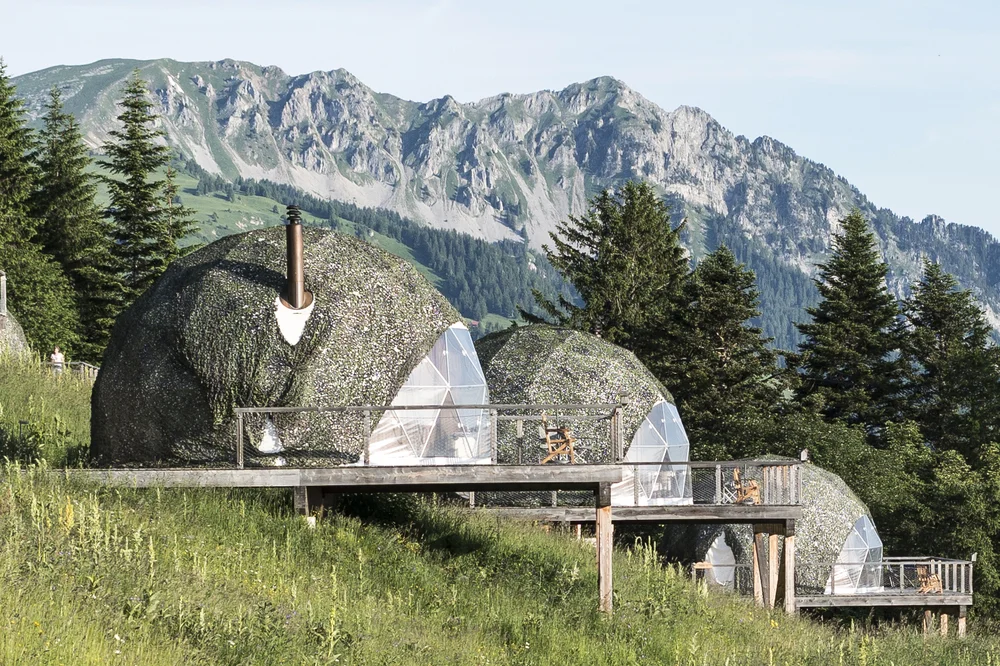
Whitepod offers a unique “Low-Impact Adventure” in the Swiss Alps. Its brand DNA is “Minimal Footprint.” Instead of a massive hotel building, guests stay in high-tech geodesic domes (pods) that are heated by pellet stoves and utilize natural spring water. The pods are designed to be moved without leaving a permanent mark on the mountain.
Product Explanation and Cost:
Nightly rates begin at €480. The product includes “Private Mountain Access,” meaning only pod guests are allowed on the surrounding trails. The cost reflects the exclusivity of the pod experience and the high-tech insulation required to keep guests warm in sub-zero temperatures using minimal energy. It is a favorite for those seeking “Quiet Luxury” and social distancing.
Use Case and Problem Solved:
Whitepod solves the “Alpine Overdevelopment” challenge. Traditional ski resorts scar the landscape with massive concrete structures. Whitepod provides a nomadic, reversible luxury experience. It is the best solve for travelers who want to wake up in the middle of a mountain meadow without the guilt of supporting invasive construction.
4. 1 Hotel Mayfair, London
:max_bytes(150000):strip_icc()/TAL-header-exterior-1-hotel-mayfair-london-1HTLMAYFAIR0524-86a45016f4724b958ab99e02a4ff871b.jpg)
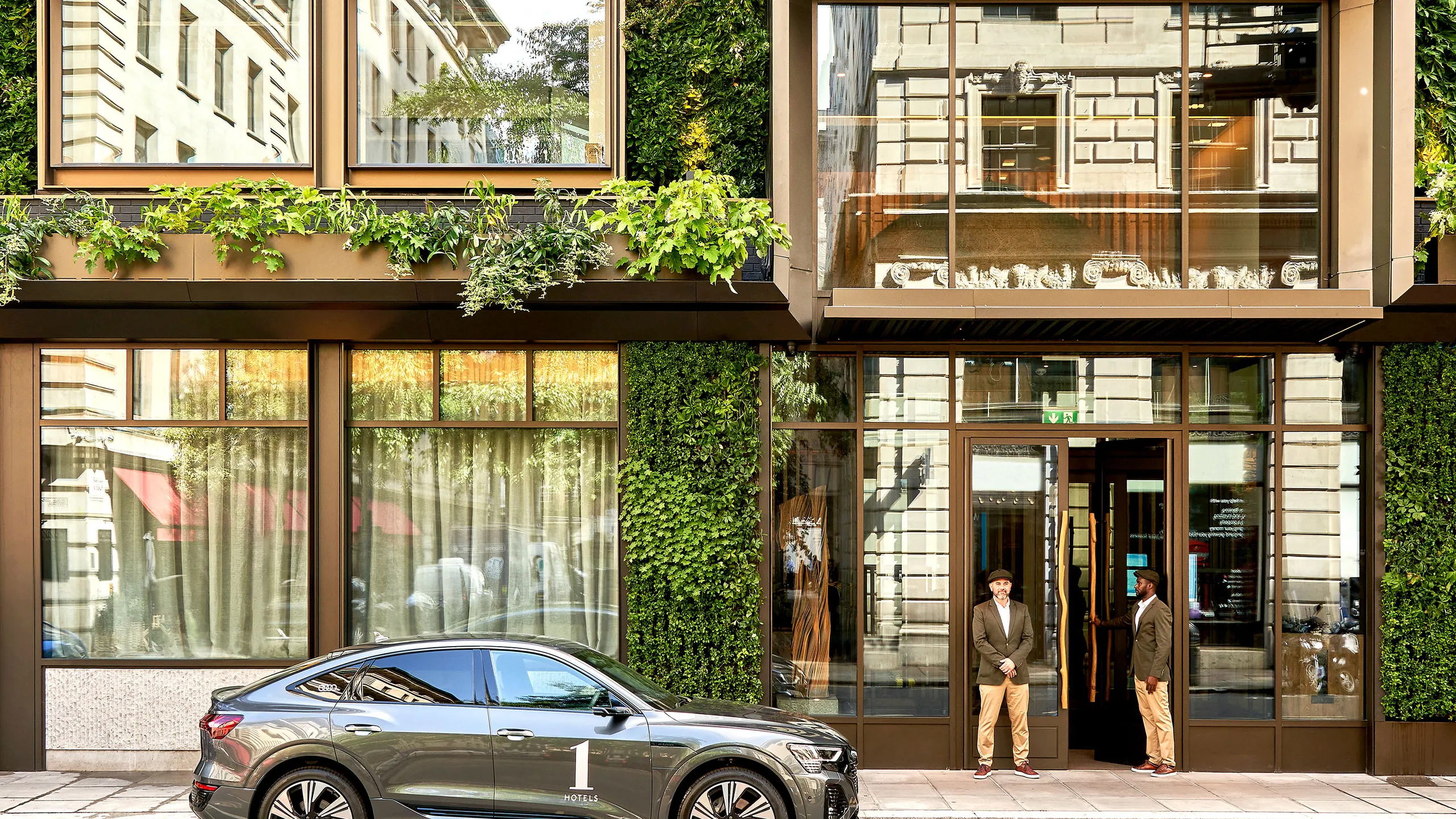
1 Hotel Mayfair is the leader in “Urban Biophilia.” Its brand DNA is “Nature in the City.” This sustainable sanctuary in the heart of London utilizes reclaimed British oak, a facade of living greenery, and a zero-waste kitchen led by world-class chefs. It proves that luxury in a metropolis doesn’t have to be sterile or wasteful.
Product Explanation and Cost:
Rates start at roughly €650. The product includes an Audi e-tron house car for guest use and “Filtered Water Taps” in every room to eliminate plastic bottles. The cost reflects its prime Mayfair location and the intensive maintenance required for its internal ecosystems and living walls. It is the ultimate choice for business travelers who want an ethical base in London.
Use Case and Problem Solved:
1 Hotel solves the “City Pollution” problem. By using massive air-filtration systems and internal plant life, the hotel provides an “Oxygenated Oasis” in a congested city. It is the best solve for professionals who need to be in London but want to escape the poor air quality and noise of the urban center.
5. The Green Solution House (GSH), Denmark

GSH is a living laboratory for “Circular Economy” principles. Located on the island of Bornholm, its brand DNA is “Eliminating Waste.” Everything in the hotel—from the carpets that filter dust to the glass-purifying balconies—is designed to be recycled or returned to the earth. It is a benchmark for sustainable building practices in Scandinavia.
Product Explanation and Cost:
Rates are highly competitive, starting at €220. The product features “Active Balconies” that generate solar power and “Biological Waste Treatment” that turns kitchen scraps into energy for the hotel. The cost is optimized for travelers who value scientific rigor and radical transparency in their eco-stays.
Use Case and Problem Solved:
GSH solves the “Hidden Waste” problem. Most hotels throw away furniture and linens every few years. GSH uses materials designed for disassembly. It is the best solve for the “Eco-Purist” who wants to know exactly where every material in their room came from and where it will go after its use.
Practical Planning: Use Case and Why People Need Eco-Luxury
Choosing to book best sustainable hotels in Europe solves three primary problems for the modern traveler in 2026:
-
The “Carbon Guilt” Problem: Aviation and high-end hospitality are high-impact industries. By choosing a carbon-negative or off-grid resort, travelers can offset their flight impact through their accommodation choice. It solves the ethical dilemma of wanting to see the world while wanting to save it.
-
The “Wellness Integrity” Problem: Traditional luxury often uses synthetic fragrances and harsh cleaning chemicals. Sustainable hotels use natural, non-toxic alternatives. This solves the health issues for travelers with sensitivities or those who want a truly “pure” detox experience.
-
The “Authenticity Gap” Problem: Generic hotel chains often feel disconnected from their location. Sustainable hotels are required to be hyper-local to reduce transport emissions. They solve the problem of “Bland Travel” by providing unique, local experiences that support the surrounding community.
How to Buy: The Booking Process for 2026
Booking these properties is a tiered process that requires looking beyond standard travel agencies:
-
Verify Certifications: Look for B Corp, Green Key, or EarthCheck logos on the website.
-
Direct Booking: Use the links provided above to book through official sites. Sustainable hotels often offer “Green Credits” (discounts for traveling by train or skipping daily room cleaning) only to those who book directly.
-
Check the “Impact Report”: Many of these hotels publish an annual sustainability report. Reviewing this ensures that your money is going toward actual conservation projects rather than marketing.
FAQ
1. Are sustainable hotels in Europe more expensive than traditional luxury hotels?
In 2026, the price gap has narrowed. While the initial “Green Premium” exists due to high-tech infrastructure costs, these hotels often have lower operating costs over time (due to energy independence). When you book best sustainable hotels in Europe, you are often paying for a higher staff-to-guest ratio and premium organic products, similar to any five-star stay.
2. Do I have to sacrifice luxury for sustainability?
Absolutely not. Properties like Svart and Lefay prove that “Eco” and “Luxury” are now synonymous. You can expect private pools, Michelin-starred dining, and 600-thread-count organic linens. The “sacrifice” is usually limited to things like single-use plastic toiletry bottles, which are replaced by high-end refillable ceramic dispensers.
3. What is the best season to book eco-hotels in the Alps?
For “Energy-Positive” stays, Summer (June-August) is ideal as solar panels operate at maximum efficiency. However, for “Carbon-Neutral” winter sports, booking in January-February at a biomass-heated resort like Whitepod provides the most authentic and low-impact experience.